





How Much Does a Generator Cost? A Practical 2026 Price Guide
How much does a generator cost? In the U.S., the answer depends on the type of generator you choose.
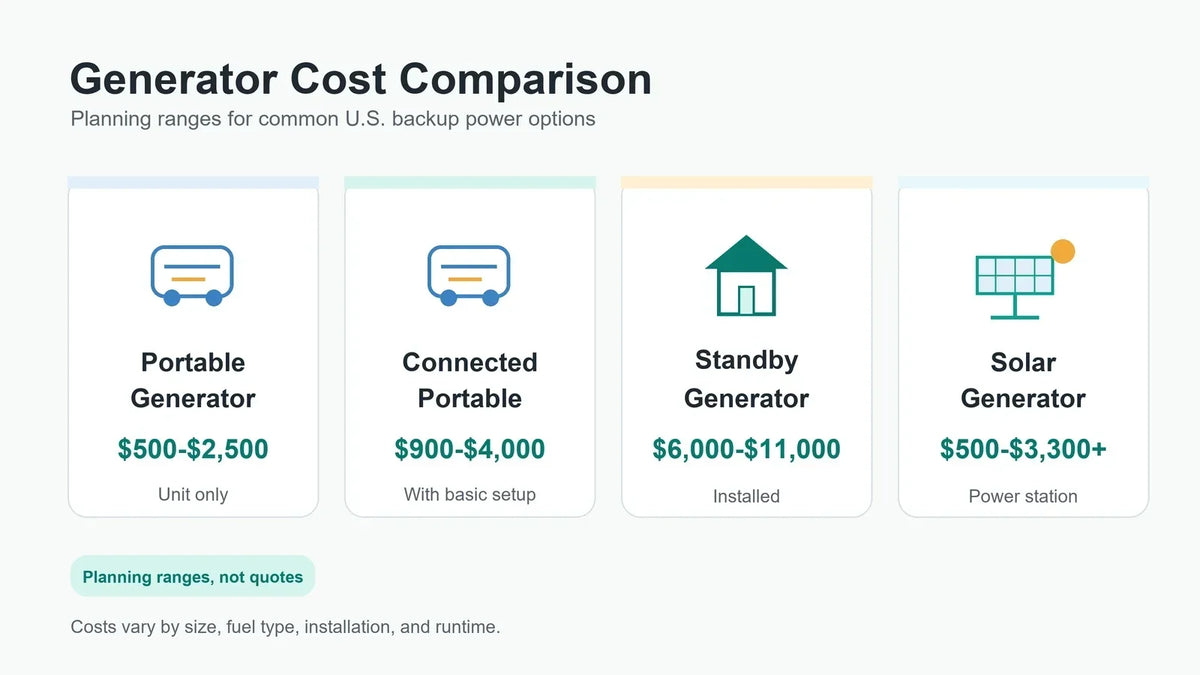
A portable generator may cost about $500-$2,500 for the unit. A connected portable setup can cost about $900-$4,000. A whole house generator cost is often about $6,000-$11,000 installed.
A solar generator or portable power station can cost about $500-$3,300+ for many consumer systems. The price depends on battery capacity, power output, solar panel support, and included accessories.
So the better question is simple: what do you need to power, for how long, and where can you use it safely?
Typical Generator Cost by Type
Here is a quick cost snapshot based on current guides from HomeGuide and HomeAdvisor.

- Portable generator cost: about $500-$2,500 for the unit.
- Connected portable generator cost: about $900-$4,000 with basic connection equipment and labor.
- Standby generator cost: often about $6,000-$11,000 installed.
- Solar generator cost: often about $500-$3,300+ for portable systems.
- Whole-home battery backup: often a five-figure project.
These are planning ranges, not fixed quotes. Local labor, permits, fuel type, electrical panel condition, and installation scope can change the final cost.
Why Generator Prices Vary
Generator installation cost can be larger than the equipment cost. A simple portable generator typically just requires fuel, a safe outdoor area, and heavy-duty extension cords. A home standby generator may need a pad, gas line, permits, transfer switch, and professional electrical work.
Backup power is also a peace of mind purchase. A peer-reviewed paper published in 2024 appeared in the *Journal of the Association of Environmental and Resource Economists*.
It studied private backup power systems in U.S. homes. It reported that 14.3% of U.S. households owned a backup generator in 2020.
Power outages also have real economic cost. Lawrence Berkeley National Laboratory estimated that long power outages cost U.S. electricity customers about $44 billion per year. This estimate uses 2015 dollars.
That does not mean every home needs an expensive system. It does show why home backup power is often compared with food loss, work disruption, medical-device needs, and family comfort.
Watts, Running Watts, and Runtime
Before asking “what size generator do I need,” separate power from energy.

The U.S. Energy Information Administration explains that watts measure power at a moment in time. Watt-hours measure electricity used over time.
- Running watts tell you how much power an appliance uses while it runs.
- Starting watts tell you the short power surge needed by motors.
- Watt-hours tell you how much energy a battery can store.
- Kilowatts are often used for larger home standby generators.
This matters for refrigerators, sump pump systems, AC units, and power tools. These devices may need more power at startup than they use while running.
For a portable power station, use this simple estimate:
Estimated runtime = usable battery capacity ÷ device power draw
Example: a 1,500Wh battery running a 300W load gives an ideal estimate of about 5 hours. Real runtime may be lower. Inverter losses, temperature, battery settings, and appliance cycling all affect results.
Portable Generator vs. Solar Generator
A fuel-powered portable generator makes electricity with an engine. A solar generator stores electricity in a battery. It can recharge from wall power, car charging, or solar power.
A fuel generator often has a lower upfront price. It can work well for long outages if you have safe outdoor space and enough fuel. But it also needs fuel storage, oil changes, and careful carbon monoxide safety.
A portable power station costs more in some cases. The trade-off is different. It runs quietly, has no engine exhaust, and can be used indoors when you follow the manual. It is often a better fit for phones, Wi-Fi, lights, laptops, fans, small appliances, RVs, camping, and selected home essentials.
Battery generator cost depends on both stored energy and power output. The NREL technical report hosted by OSTI explains that U.S. solar and energy storage cost benchmarks use bottom-up cost estimates for major system inputs. That is why battery size, inverter capacity, hardware, labor, permitting, and other soft costs can affect the final price.
As of August 28, 2026, ABOK’s U.S. collection listed portable power stations from 1,024Wh to 9,792Wh. Sale prices ranged from $499 to $3,599 on the ABOK all-products page. Prices, stock, and specifications can change, so check the live product page before buying.
Safety Costs You Should Include
Fuel-powered generators need strict safety planning. The EPA says you should use portable fuel generators at least 20 feet from your home. Do not use them in garages, basements, living spaces, balconies, decks, or porches.
The CDC also warns about carbon monoxide during power outages. It recommends using an extension cord long enough to keep the generator more than 20 feet from windows, doors, and vents.
The risk is serious. A 2022 New England Journal of Medicine analysis studied 581 major U.S. power outages from 2007 through 2018. It found that emergency-department visits for carbon monoxide poisoning increased during outages lasting more than 24 hours.
A NIST-linked Building and Environment study also modeled a gasoline generator running in a garage. It found that unsafe generator placement can create dangerous carbon monoxide exposure inside a home.
If you want to power home circuits, budget for professional help. FEMA training material explains that a transfer switch helps separate a building from utility power during generator use. Generator transfer switch cost is part of a safer setup.
Choose by Use Case

Use this quick buying framework.
- Phones, Wi-Fi, lights, and laptop: consider a small power station or small inverter generator.
- Refrigerator and basic essentials: consider a mid-size portable power station or portable generator.
- Sump pump or several appliances: look for higher running watts and enough surge capacity.
- RV or camping: consider a portable power station or solar generator.
- Automatic backup: compare home standby generators.
- Large HVAC or whole-home loads: use a professionally installed standby system.
Do not overspend if you only need basic essentials. Do not underbuy if you need a well pump, central AC, electric heat, or heavy loads. Those loads need careful sizing.
ABOK is most relevant if you want clean, rechargeable backup power for selected essentials, RV use, camping, solar charging, or indoor-friendly backup. You can compare current options on the ABOK home backup power stations collection.
FAQ
How much does a generator cost for a house?
A basic portable setup may cost under $1,000. A connected portable generator costs more once wiring and transfer equipment are included. A whole-house standby generator usually costs several thousand dollars installed.
What is the cost to run a generator?
The cost to run a generator depends on fuel type, fuel efficiency, generator size, local fuel prices, and runtime. A battery-based power station has no gasoline cost, but you still pay for grid charging or solar equipment.
Is a solar generator cheaper than a portable generator?
A basic fuel-powered portable generator is often cheaper upfront. A solar generator may cost more at purchase. It runs quietly, has no engine exhaust, and can be used indoors when used correctly.
Do I need a transfer switch?
If you want to power home circuits, talk with a qualified electrician about a transfer switch or approved interlock system. Never backfeed power through a wall outlet.
What size generator do I need?
List the appliances you need at the same time. Add their running watts. Then check starting watts for motors, pumps, compressors, and tools. Use the appliance label or manufacturer manual when possible.
Can I use a portable generator indoors?
No. Never use a fuel-powered generator indoors, in a garage, on a porch, or near windows and doors. Carbon monoxide can be deadly.
Conclusion
So, how much does a generator cost? A portable generator may cost hundreds to a few thousand dollars. A standby system costs more because it is professionally installed. A solar generator or portable power station depends on battery size, solar input, and power output.
Start with your real backup need. Then compare typical cost, installation, safety, fuel type, runtime, and maintenance. That will lead to a better choice than shopping by price alone.
Share:
What Is a Power Station? mAh, Wh, and Battery Capacity Explained
How Long Does a Power Outage Last?