





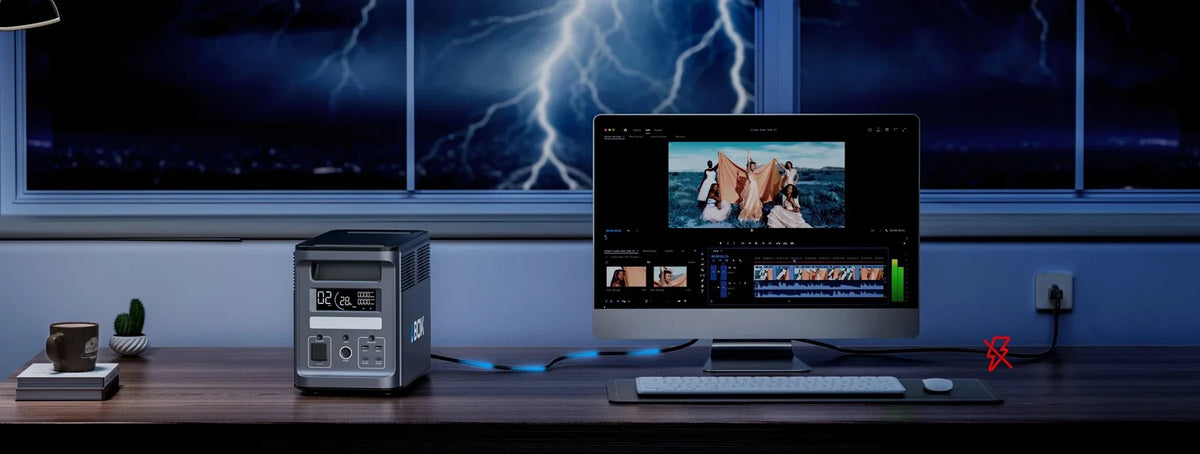

How long does a power outage last? A power outage can last less than an hour, several hours, or several days after severe weather or major grid damage. For practical home planning, use three time limits: 4 hours for refrigerated food safety, 24 hours for communication and medical-device planning, and 72 hours for basic emergency power readiness. The U.S. Energy Information Administration reported that U.S. customers averaged 11 hours of electricity interruptions in 2024, but that is an annual average, not a forecast for one outage.
How Long Does a Power Outage Usually Last?
A short neighborhood outage may be fixed quickly if the cause is simple and utility crews can reach it safely. A widespread outage caused by hurricanes, ice, flooding, wildfire, or damaged transmission equipment can take much longer.
National data helps set expectations, but it should not be treated as a precise restoration estimate. Your utility’s outage map is the best real-time source because it reflects local crews, local grid damage, and current repair priorities.
Outage lengthMain planning concernWhat to do firstLess than 1 hourMinimal disruptionCheck your utility’s outage map and avoid opening the refrigerator.1–4 hoursPhones, lighting, Wi-Fi, food temperatureKeep fridge and freezer doors closed and save phone battery.4–24 hoursFood safety, communication, essential devicesMove perishables to a cooler if you have ice, and prioritize medical devices.24–72 hoursEmergency power and home comfortManage heat, cooling, water, communication, and backup power carefully.More than 3 daysLong term emergency conditionsConsider a powered location if health, temperature, or medication storage is at risk.
Why Some Power Outages Last Longer
The cause matters most. A small equipment fault may be repaired faster than a storm that brings down many lines across a county.
Access also matters. Crews may need roads cleared, flooded areas checked, or damaged poles replaced before power can be restored safely. If substations, transmission lines, or many local circuits are affected, restoration often happens in stages.
That is why two homes on the same street may not come back at the same time. They may be served by different circuits, transformers, or service lines.
The 4-Hour Food Safety Rule
Food safety becomes a real concern faster than many people expect. According to FoodSafety.gov, an unopened refrigerator can keep food safe for up to 4 hours during a power outage.
A full freezer can hold a safe temperature for about 48 hours if the door stays closed. A half-full freezer is closer to 24 hours. After the safe window, check temperatures and discard perishable food that has been above 40°F for too long.
Do not taste food to see if it is safe. If you are unsure, throw it out.
What to Do If the Outage Lasts Overnight
Once a power outage may last overnight, switch from waiting mode to planning mode. Keep phones charged, use text messages when possible, and preserve battery power for alerts, emergency calls, and weather updates.
If anyone in your home uses powered medical equipment, refrigerated medicine, or a CPAP machine, follow Ready.gov power outage guidance and have an alternate power or refrigeration plan before an outage happens. Ask a doctor, pharmacist, or device manufacturer how long specific medicine or equipment can safely go without AC power.
Temperature is another limit. If your home becomes dangerously hot or cold, move to a powered public location, a friend’s home, or a community shelter.
How Much Backup Power Do You Need?
Backup power planning starts with the outage length you want to cover. Then list only the essentials: phone charging, lights, internet equipment, a refrigerator, medical devices, fans, or a few small appliances.
Use this simple formula:
Energy needed in watt-hours = device watts × hours of use
Battery capacity tells you how much energy a portable power station or home battery backup system can store. Power output tells you what it can run at one time. Both matter. A battery can have enough stored energy but still fail to run a device if the AC output is too low for the load.
For a deeper sizing method, ABOK’s guide on what size generator you need explains how to compare running watts, starting watts, and backup power needs. ABOK’s home wattage guide can also help separate essential loads from whole-home loads.

| Planning goal | Backup power approach |
|---|---|
| 1–4 hours | Power bank or small battery powered station for phones, lights, and basic electronics. |
| 4–24 hours | Portable power station sized around essential loads, AC outlets, and realistic runtime. |
| 24–72 hours | Larger battery capacity, solar power recharging, or a fuel plan if using a fuel generator. |
| Long term backup | Expansion batteries, extra batteries, or professionally installed energy storage may be needed. |
| Whole-home backup | Professional load calculation and approved connection equipment. |
Portable Power Station vs. Generator During an Outage
A portable power station is usually best for quiet indoor backup power for small to moderate loads. It can power phones, routers, lights, laptops, some medical devices, and certain appliances if its AC output and battery capacity are correctly sized.
Fuel generators can support higher loads, but they require fuel, ventilation, maintenance, and strict generator safety habits. They should never be used indoors or in enclosed spaces.
If your goal is keeping the whole home powered, do not guess. Whole-home backup power needs a proper load calculation and, in many cases, a transfer switch installed by a qualified professional.

What to Check Before Buying Backup Power
Do not choose backup power by capacity alone. Check the devices you actually need to run and compare them with the unit’s rated output, AC outlets, solar input options, and battery design.
Look at these items first:
- Battery capacity, measured in watt-hours
- Continuous power output and surge output
- AC output and number of AC outlets
- Solar power input, if you want daytime recharging
- Battery chemistry, including whether the model uses a LiFePO4 battery
- Battery life and warranty terms from the official product page
- Expansion batteries or extra batteries, if longer runtime is needed
- Whether the system is portable or intended as a fixed home backup power setup
For most households, the best choice is not the largest system available. It is the system that matches your essential loads, expected outage length, and comfort level with setup and maintenance.

Safety Rules for Longer Outages
Fuel-powered portable generators must be used outdoors. The CDC advises keeping generators at least 20 feet from doors, windows, and vents because carbon monoxide can build up quickly and can be deadly.
The CPSC also recommends working carbon monoxide alarms on every level of the home and outside sleeping areas. Never run a fuel generator in a garage, basement, shed, porch, or enclosed area.
Do not plug a generator into a wall outlet to power your home. The Electrical Safety Foundation International warns that a transfer switch is needed to isolate generator power from utility lines and prevent backfeeding.
Battery power stations do not create engine exhaust, but they still need to be used within their rated output. Keep them dry, follow the manual, avoid overloaded extension cords, and do not improvise unsafe wiring.
FAQ
Can a power outage last several days?
Yes. Most short disruptions last a few minutes or a few hours, but major storms, flooding, ice, wildfire, and grid equipment damage can cause outages that last for days. If the outage affects medical devices, refrigerated medicine, heat, cooling, or water access, make a relocation plan early.
Why does my neighbor have power when I do not?
Nearby homes may connect to different circuits, transformers, or service lines. Your neighbor may be on a restored section while your individual service line is still damaged. Report your outage to the utility even if nearby homes already have power.
Should I unplug appliances during a power outage?
Unplug sensitive electronics and turn off major appliances that were running when the outage started. Leave one light switched on so you know when power returns. After restoration, reconnect appliances gradually instead of turning everything back on at once.
Is a portable power station enough for a long outage?
It depends on battery capacity, power output, and the devices you need to run. A portable power station can be useful for phones, lights, Wi-Fi, laptops, and some medical devices. Longer outages may require solar charging, extra batteries, or a larger home backup power plan.
Bottom Line
A power outage can be brief, but your plan should cover the first 4 hours, the first night, and a possible 72-hour emergency. Check your utility’s restoration estimate, protect refrigerated food early, and decide which loads truly need backup power. For most homes, the smartest plan is not keeping every device running. It is protecting food, communication, medical essentials, lighting, and basic comfort until the grid returns.
Share:
How Much Does a Generator Cost? A Practical 2026 Price Guide
Generator Size for House Backup