





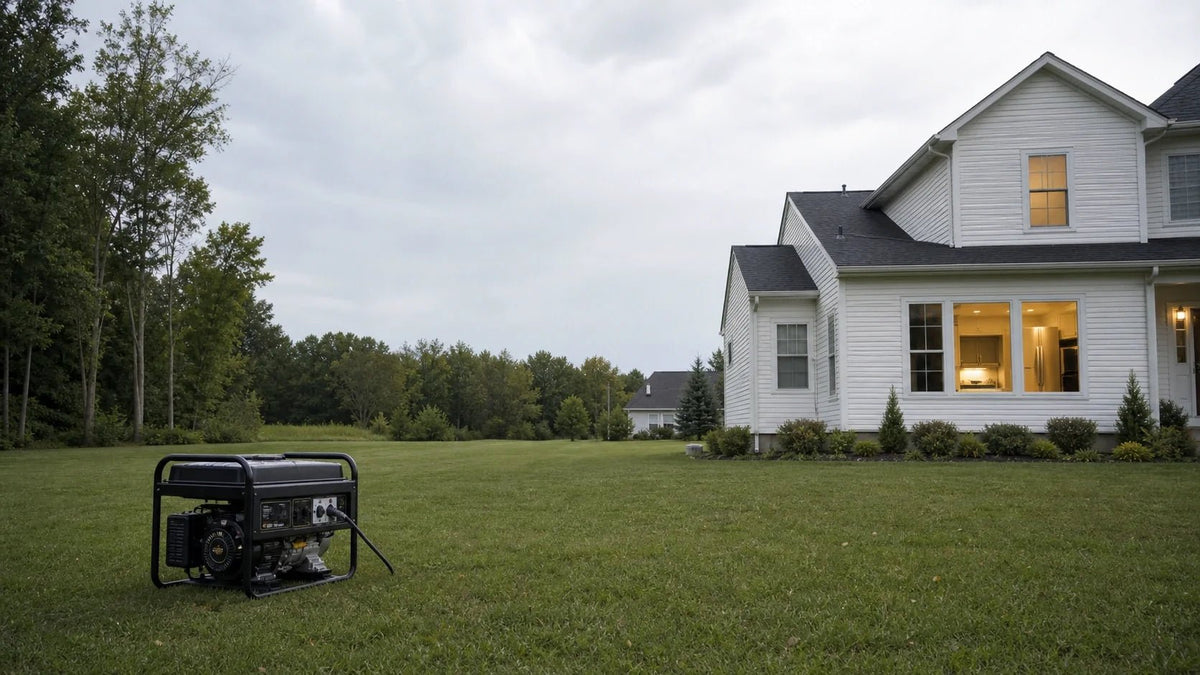

The right generator size depends on what you need to power at the same time. It does not depend on your home’s square footage alone.
Start by adding the running watts of your essential appliances. Next, account for the largest startup surge from equipment such as a refrigerator, air conditioner, or water pump. Your generator must support both the continuous load and the brief startup demand.
If you are choosing a solar generator or portable power station, output power is only half the calculation. You also need enough battery capacity to provide the runtime you want.
How to Calculate What Size Generator You Need

Begin by listing the appliances and devices you want to use during an outage, camping trip, or work session. Include only items that may run at the same time.
For each item, record two numbers:
- Running watts: The power the appliance uses during normal operation.
- Starting watts: The brief burst of power required when a motor or compressor starts.
You can usually find these values on the appliance label, in the owner’s manual, or on the manufacturer’s website. A generator size calculator can provide a quick estimate, but the specifications for your actual equipment are more reliable.
If a label shows volts and amps but does not list watts, use this formula:
Watts = Volts × Amps
This calculation estimates the running load. It may not show the extra power needed to start a motor or compressor.
Use This Generator Sizing Formula
A practical sizing formula is:
Required peak output = Total running watts + Largest additional startup surge
The additional startup surge is:
Additional startup surge = Starting watts − Running watts
This method avoids counting the same appliance’s running load twice.
San Diego Gas & Electric uses a similar approach in its generator sizing worksheet. The utility also recommends checking actual appliance and generator specifications before making a final decision.
Here is a simple example:
ApplianceRunning WattsStarting WattsAdditional SurgeRefrigerator5001,200700Microwave1,0001,0000Portable fan4012080Television4004000Total running load1,940Largest additional surge700
The estimated peak requirement is:
1,940 W + 700 W = 2,640 W
A generator rated for exactly 2,640 starting watts would leave little room for changes in demand. Choose a model with continuous and peak ratings above your calculated loads. You should also confirm that it provides the correct voltage, outlets, and connections.
The appliance values above are general estimates from the utility worksheet. Use the documented requirements for your own appliances whenever possible.
Generator Wattage Ranges by Use
Generator output ranges can help you narrow your options. However, they are only starting points.
Generator OutputCommon Uses1,000–2,000 wattsLights, electronics, fans, and a few small appliances2,000–4,000 wattsCamping, basic RV use, or limited home backup4,000–7,500 wattsSeveral essential household appliances7,500–12,500 wattsPumps, selected HVAC equipment, and broader home backupMore than 12,500 wattsHigh-demand circuits or extensive household coverage
The equipment in your home matters more than the number of rooms. A small home with electric heat, central air conditioning, and a well pump may require more power than a larger home that uses natural gas for heating and cooking.
What Size Home Backup Generator Do I Need?
Start with the appliances and systems that protect your health, food, communication, and property during an outage.
An essential-load plan may include:
- Refrigerator or freezer
- Selected lights
- Internet equipment
- Phone chargers
- Furnace blower
- Sump pump or well pump
- Necessary medical equipment
- One cooking appliance
You may not need to operate everything at once. For example, you can turn off a microwave before starting another high-wattage appliance. This type of load management may allow you to use a smaller home backup generator.
Pay close attention to appliances with motors or compressors. Refrigerators, air conditioners, pumps, and furnace blowers often need more power to start than they use during normal operation. Check the starting requirements for each model instead of relying on a general multiplier.
Essential Backup vs. Full-Home Backup
Home backup can mean two different things.
The first option is to power only essential circuits. This approach keeps important appliances operating while limiting fuel use and equipment size.
The second option is to run most of the home as usual. This may include central air conditioning, electric water heating, cooking appliances, laundry equipment, and other large loads. It normally requires a much larger system.
Decide which option you need before comparing generators. Buying enough capacity to power every appliance at once may be unnecessary if your main goal is emergency backup power.
What Size Whole House Generator Do I Need?
A whole house generator should be sized according to the home’s actual electrical loads. Square footage cannot show how much power your appliances and mechanical systems require.
A whole-home calculation should consider:
- Electrical service voltage
- Essential and optional circuits
- Central air conditioner startup demand
- Furnace blower requirements
- Well and sump pumps
- Electric water heating
- Cooking and laundry equipment
- Fuel availability
- Automatic load management
A permanently installed standby generator is often better suited to automatic or extensive home backup. A qualified electrician or generator installer should complete the final calculation. The installer can also check local codes, fuel supply, transfer equipment, and the startup requirements of large appliances.
Running Watts vs. Starting Watts
Most generators have two power ratings.
Running watts describe how much power the generator can provide continuously under its stated operating conditions.
Starting watts describe the higher output available for a short time. This extra output helps start appliances with motors or compressors.
Both ratings matter. Your combined running load must fit within the generator’s continuous rating. The largest expected startup event must also fit within its peak rating.
For example, a generator may provide enough running power for an air conditioner. However, it may still overload when the compressor starts.
The basic sizing formula assumes that the largest motor starts while your other selected appliances are already running. If several large motors may start together, you may need load-management controls or a more detailed professional assessment.
Check the Rating for Your Fuel Type
Dual-fuel and tri-fuel generators may have different output ratings for gasoline, propane, and natural gas. Review the ratings for the fuel you expect to use.
Do not size the system from the highest number shown in an advertisement if that rating applies to a different fuel. Also consider how much fuel you can store safely and how long the supply will last during an extended outage.
How to Size a Solar Generator or Portable Power Station

A solar generator requires two calculations:
- Output in watts: Determines which appliances it can operate.
- Battery capacity in watt-hours: Helps determine how long it can operate them.
The unit’s continuous AC output must exceed the total running load. Its surge output must also support the largest startup demand.
Use this formula to estimate the required battery capacity:
Required battery capacity (Wh) = Load (W) × Runtime (hours) ÷ Expected usable-system efficiency
Suppose a group of devices uses a constant 200 watts. Operating that load for five hours requires 1,000 watt-hours before accounting for conversion losses or reserve capacity.
Actual runtime may vary because of inverter losses, temperature, battery condition, standby consumption, and appliances that cycle on and off. The ABOK backup-time calculator can help you compare appliance loads with portable power station capacity.
Before selecting a product, verify its continuous output, surge output, battery capacity, charging limits, voltage, and available ports on the official product page.
Watts and Watt-Hours Measure Different Things
Watts measure power. They tell you how much electrical demand a power station can support at one moment.
Watt-hours measure stored energy. They help estimate how long the battery can support a load.
A 2,000-watt power station does not necessarily have a 2,000-watt-hour battery. It may have enough output to start a refrigerator but not enough capacity to run it through a long outage.
The opposite can also happen. A large battery may provide plenty of energy, but its inverter may be unable to start an appliance with a high surge requirement.
When a Smaller Generator May Be Enough
You may be able to reduce the required generator size by managing when appliances operate.
Helpful strategies include:
- Powering only essential circuits
- Starting large motor loads separately
- Rotating high-wattage appliances
- Avoiding simultaneous cooking and electric heating
- Using efficient lights and electronics
- Following a written load schedule
- Using an approved soft-start device with compatible HVAC equipment
Manual load management requires regular attention. It may not be suitable when essential equipment must operate automatically or when no one is available to monitor the system.
Common Generator Sizing Mistakes
Ignoring Startup Demand
A generator may support an appliance’s normal running load but shut down when its motor starts. Always check both running watts and starting watts.
Choosing by Home Size
Two homes with the same floor area can have very different power needs. Size the generator according to actual appliances and systems, not square footage.
Including Every Appliance
You may not need to run the range, dryer, water heater, and air conditioner during an outage. Focus on essential loads before paying for more capacity.
Comparing Only Peak Ratings
Peak power is usually available for a limited time. Use the continuous rating for your normal combined load and the surge rating for startup demand.
Forgetting Voltage Requirements
A generator with enough wattage may still be incompatible with your equipment. Check whether you need 120-volt power, 240-volt power, or both.
Ignoring Fuel-Specific Output
A multi-fuel generator may provide different output levels with different fuels. Base your calculation on the rating for the fuel you intend to use.
Generator Safety and Home Connections

Never connect a portable generator to a household wall outlet. This dangerous practice is called backfeeding. It can send electricity into utility lines and create an electrocution risk for utility workers and nearby residents.
The U.S. Consumer Product Safety Commission warns against backfeeding. It also recommends using properly rated outdoor extension cords when appliances connect directly to a portable generator.
If you want to power circuits through your home’s electrical system, use an approved transfer switch or other code-compliant transfer equipment. A qualified electrician should select and install it. Never improvise a connection to an electrical panel.
Fuel-burning generators also produce carbon monoxide. The CPSC’s carbon monoxide guidance says to operate a portable generator outdoors at least 20 feet from the home. Point the exhaust away from buildings, doors, windows, and vents.
Never run a fuel-burning generator inside a home, garage, basement, crawlspace, shed, or other enclosed area. Opening a door or window does not make indoor operation safe. Install working carbon monoxide alarms on every level of the home and outside sleeping areas.
A battery-powered solar generator does not produce engine exhaust. Even so, you must keep it dry and follow the manufacturer’s ventilation, electrical, and temperature requirements.
Five-Step Generator Buying Checklist
Use this checklist before choosing a generator:
- List the appliances that must operate at the same time.
- Find their running watts and starting watts.
- Add the running loads and the largest additional startup surge.
- Check output ratings, voltage, outlets, connections, and fuel-specific performance.
- For a battery system, calculate the watt-hours needed for your target runtime.
A generator size calculator can help you create an initial estimate. Before buying, compare the result with the generator’s official specifications and your appliances’ documented requirements.
Ask a qualified electrician or generator installer to review any system that will power central HVAC, pumps, critical equipment, or household wiring.
Frequently Asked Questions
Will a 3,500-Watt Generator Run a Refrigerator?
It may, as long as the refrigerator’s running and starting requirements fit within the generator’s continuous and surge ratings. You must also include every other appliance connected at the same time. Check the refrigerator label or manual for model-specific information.
Is a 7,500-Watt Generator Enough for a House?
A 7,500-watt generator may operate several essential household circuits, but it may not power the entire home. Central air conditioning, electric heat, water heaters, ranges, and pumps can significantly increase demand. Complete a load calculation before choosing a generator.
How Much Extra Generator Capacity Do I Need?
Leave some room above your calculated running and peak loads. However, there is no single margin that fits every generator and application. Follow the sizing and operating guidance provided by the manufacturer.
Do I Need Watts or Watt-Hours?
Use continuous and starting watts to size a fuel-powered generator. For a solar generator or portable power station, you need both output watts and battery capacity in watt-hours.
Do I Need a Transfer Switch?
You need approved transfer equipment when connecting a generator to your home’s electrical system. A qualified electrician should install the equipment according to local codes. However, a transfer switch is usually unnecessary when you connect appliances directly to the generator with properly rated extension cords.
To choose the right generator size, first add the running watts of all appliances you plan to use at the same time. Then add the largest startup surge. Make sure the generator’s continuous and peak output ratings can handle these loads. For a solar generator, you must also calculate how much battery capacity you need. Always use a qualified professional when connecting a generator to household wiring or powering major equipment.
Share:
What Does UPS Stand For? A Simple Backup Power Guide
How Many Watts to Run a House? A Practical Sizing Guide